
Door feels heavy or drops quickly
That often points to a spring or cable issue. Springs store significant energy and are not a DIY fix; a contractor can confirm balance and replace the correct parts.
Serving Manchester, New Hampshire & surrounding areas
Calls answered around the clock
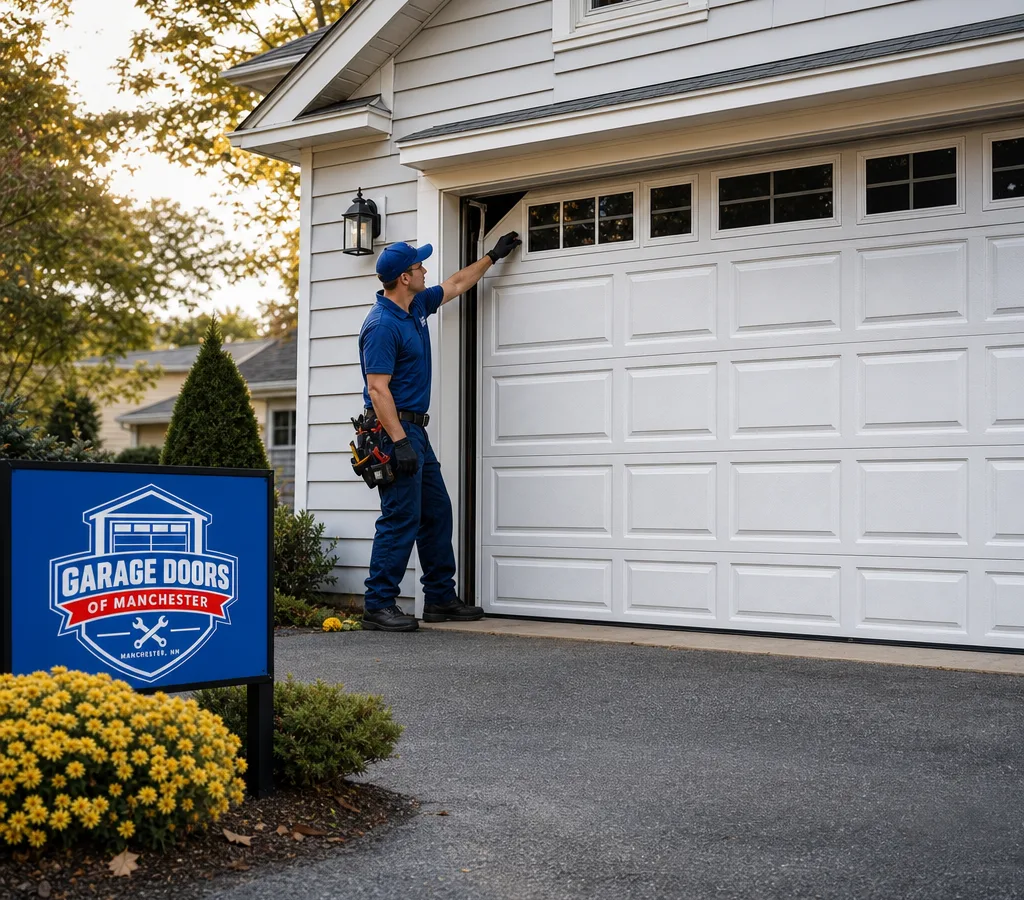
Garage door service · Hooksett
Describe what the door is doing once and we'll connect you with a local contractor who works on garage doors and openers in your area.
CALL NOW: (603) 413-3270Door, opener and safety checks
Garage doors are heavy, spring-loaded systems that rely on alignment, balance, and safety sensors to work correctly. When any one part starts to drift out of spec, you can get loud operation, a door that stops halfway, or a door that won't close at all. Garage Door Service Hooksett typically means a contractor comes out to diagnose what's happening, correct the underlying mechanical issue, and confirm the door and opener operate safely afterward.
Common service calls include:
Hooksett homes see a lot of seasonal temperature swings, and that matters for garage doors. Cold weather can thicken grease, stiffen rollers, and expose weak springs or cracked weather seal. Warm, humid stretches can swell wood trim and change clearances at the opening. A contractor will treat the symptom you notice, but also look for the reasons the door is being forced to work harder than it should.
If you're trying to decide whether this is a repair call or a bigger replacement decision, you can start with one conversation. Garage doors of Manchester connects you with a local contractor for garage door repairs in Hooksett, and you can ask the pro who calls back what options make sense for your door's condition.
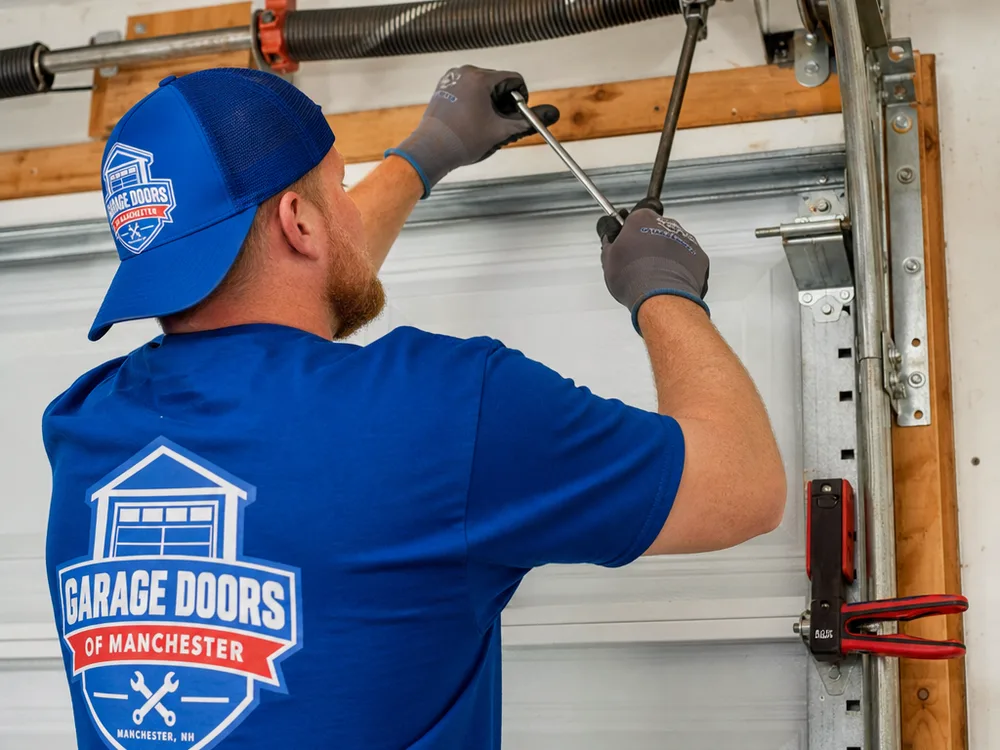
That often points to a spring or cable issue. Springs store significant energy and are not a DIY fix; a contractor can confirm balance and replace the correct parts.
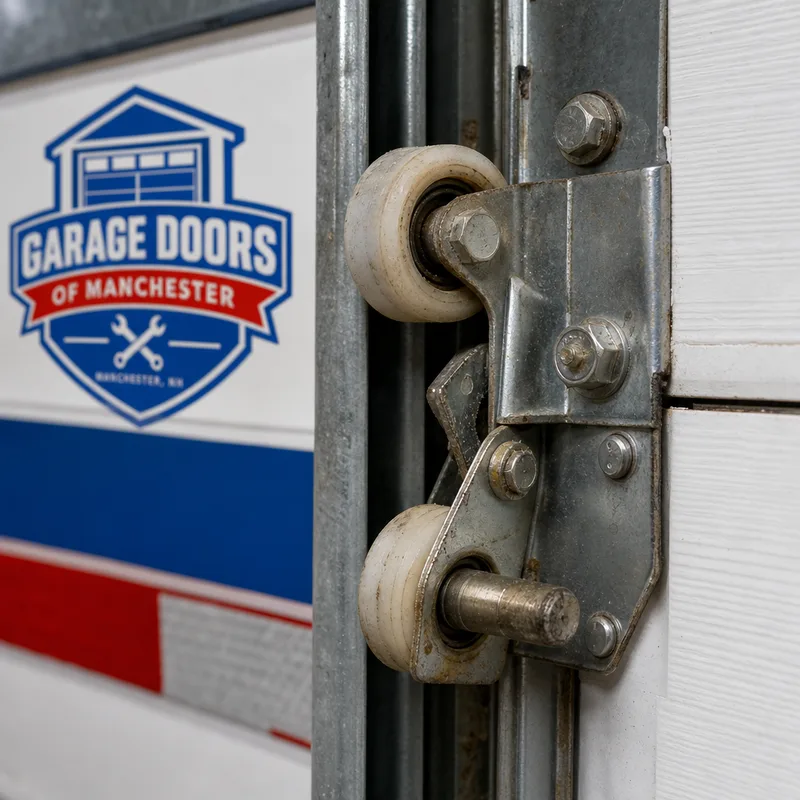
Noises usually come from worn rollers, loose hinges, track alignment, or dry bearings. A service visit focuses on the source, not just lubrication.
This can be travel limits, force settings, binding in the tracks, or photo-eye sensor trouble. A contractor tests the full cycle and safety reversal.
A door can jump a roller out of the track after an impact or hardware failure. The priority is re-seating and aligning the system without bending components further.
The issue may be a broken spring, a disengaged trolley, a stripped gear, or a snapped cable. A contractor checks both the opener and the door hardware.
From symptoms to final test
When you call, it helps to mention whether you have torsion springs above the door or extension springs along the tracks, plus the door material. If the opener is involved, share the brand and whether the wall button works.
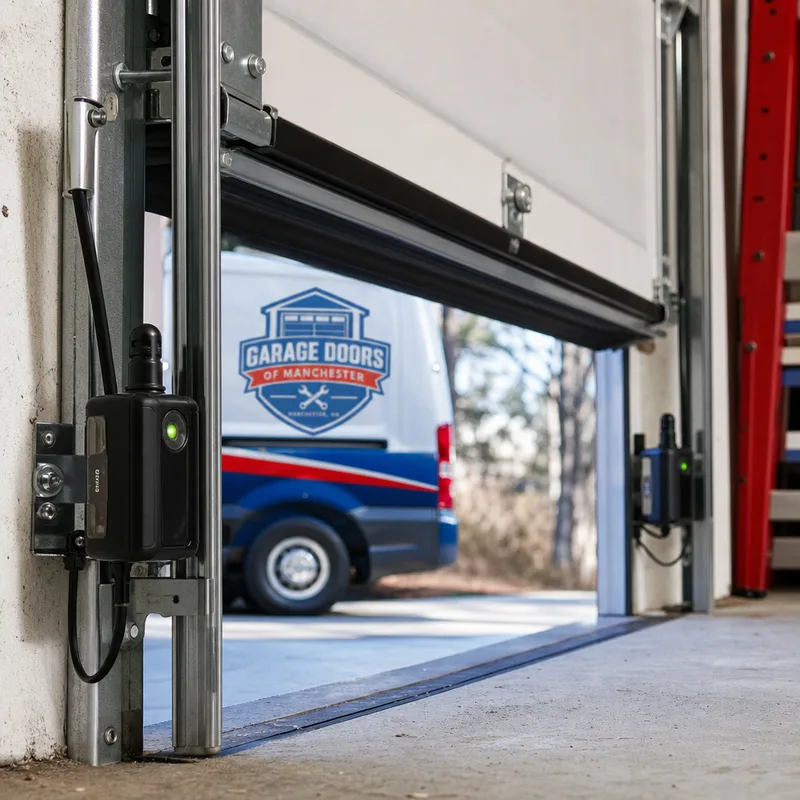
A contractor typically checks track alignment, roller condition, hinge wear, cable routing, the bottom bracket area, and door balance. For opener issues, they'll check sensors, travel limits, and force settings.
Depending on the diagnosis, the work may involve replacing springs, rollers, hinges, cables, or operator components, then re-tensioning and aligning the system so the door moves smoothly.
After repairs, the door is cycled multiple times and the safety reversal is verified. You'll be told what was changed and what maintenance is reasonable between service visits.
If your garage door is stuck, noisy, or not closing reliably, describe what you're seeing once and get connected with a local contractor who handles Garage Door Repairs Hooksett.
Hardware, sensors and door alignment
Know what to do next
A broken spring is often paired with a door that suddenly feels too heavy to lift or won't lift at all. You may also see a visible gap in a torsion spring above the door, or you may notice the opener strains and the door barely moves. Stop using the opener and describe what you saw when you call so the contractor arrives prepared.
It depends on whether the door is balanced and supported. If a spring or cable is failing, releasing the opener can allow the full weight of the door to drop. If you need access, tell the contractor whether the door is stuck open, stuck closed, or partway, and whether anything looks loose or frayed.
Reversing near the floor is commonly caused by misaligned photo-eye sensors, a small obstruction, or travel-limit and force settings that are out of adjustment. Binding in the track or a stiff bottom seal can also trigger reversal. A contractor will check sensor alignment first, then confirm the door moves freely by hand before adjusting opener settings.
A door can tilt when a lift cable slips off the drum, a roller breaks, or a hinge fails, and impacts can bend track sections. Once the door is racked in the opening, continuing to run the opener can worsen the damage. For Garage Door Repairs Hooksett, it helps to tell the contractor which side looks lower and whether you heard a bang or grinding noise.
If the opener runs but the door barely moves, the door system—springs, cables, and rollers—is often the real problem because the opener is not meant to lift a dead-weight door. If the door moves smoothly by hand but the opener won't move it, that points more toward the opener, sensors, or controls. A contractor will usually test the door balance with the opener disconnected to separate the two.
Have the door size, door material, and opener brand handy, and describe the last normal cycle you remember. Mention any recent impact, power outage, or weather event. If you can do so safely, note whether the door is closed, open, or stuck mid-travel.
Yes. If you're searching more broadly than Hooksett, we can also connect you for garage door repair in Manchester and nearby communities, so you still describe the problem once and then speak directly with the contractor who can take the job.
One call starts the connection
Pick up the phone and tell us what the door is doing. We'll connect you with a local contractor who can diagnose the issue, explain the repair options, and let you decide the next step.