Opening and track fit
Headroom, sideroom, backroom, jamb condition, and whether standard, high-lift, or vertical-lift track makes sense for your space.
Serving Manchester, New Hampshire & surrounding areas
Calls answered around the clock
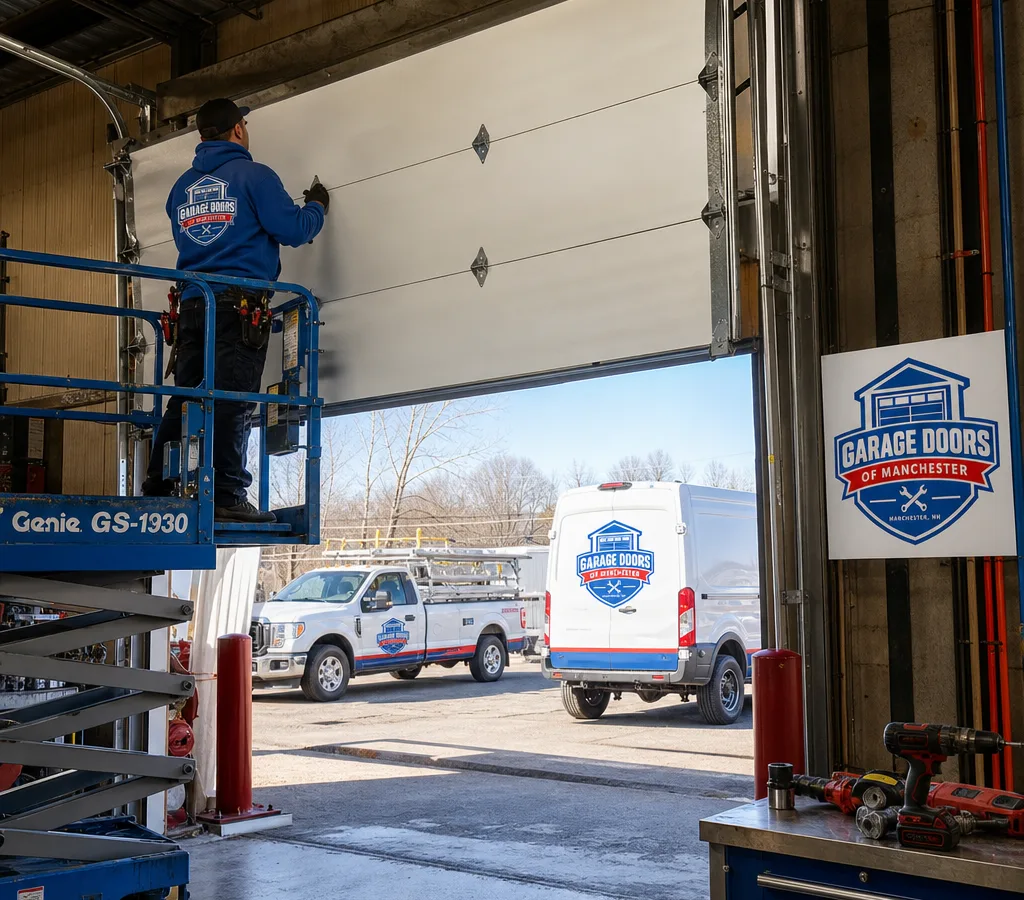
Commercial garage doors · Manchester
Describe your facility and door needs once, then get connected with a local Manchester-area contractor who installs and services commercial overhead doors.
CALL NOW: (603) 413-3270Docks, bays and facilities
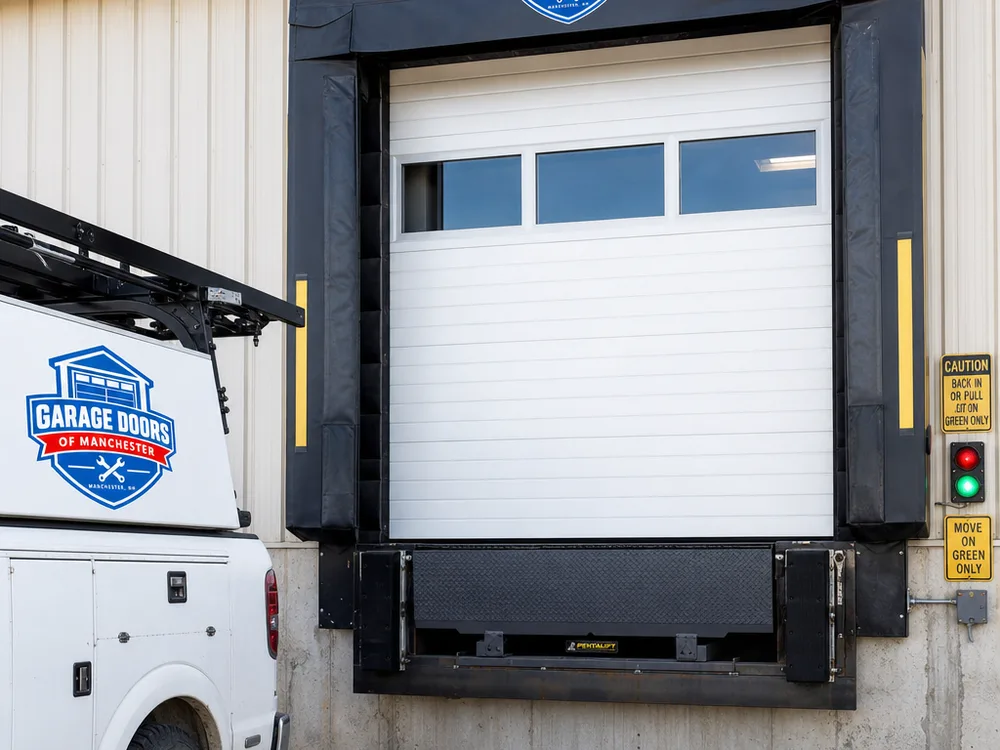
Commercial garage door installation is more than hanging a panel. A door that cycles all day at a loading dock has different requirements than a rear service bay or a small retail receiving door. The contractor you're connected with will look at how the opening is used, the headroom and sideroom available, traffic patterns, and the operator and safety equipment needed.
In Manchester, a lot of commercial spaces are older buildings where the opening isn't perfectly square, the concrete is chipped at the jambs, or there are low beams and duct runs that limit track options. A good installer plans for that up front so the door runs true, seals at the floor, and doesn't fight the opener.
Common commercial door setups include:
If you're comparing options and you also have a home door that's been acting up, the main garage door repair service is typically handled a little differently than an overhead door at a facility, especially when it comes to operators, safety devices, and access control.
When you call Garage doors of Manchester, the point is simple: explain the opening size, door type if known, and what you want the door to do day to day, and we'll connect you with a local contractor who handles commercial garage door service and installation work in the Manchester area.
Fit, controls and safe operation
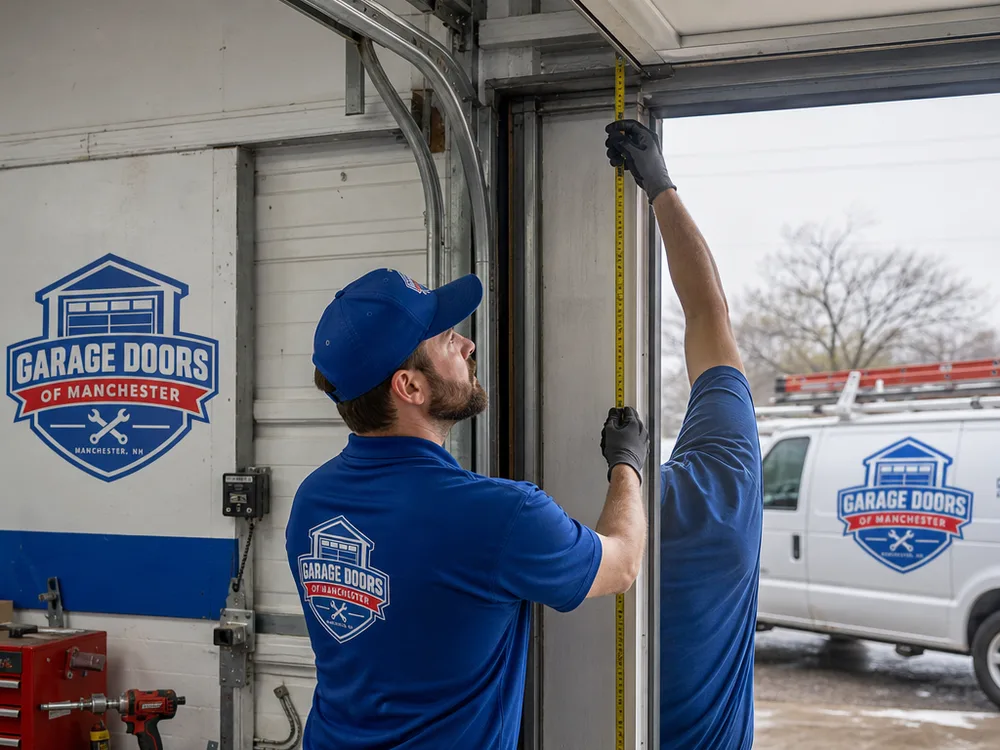
Headroom, sideroom, backroom, jamb condition, and whether standard, high-lift, or vertical-lift track makes sense for your space.
Trolley vs jackshaft operators, control stations, key switches, and how the operator will be mounted and serviced.
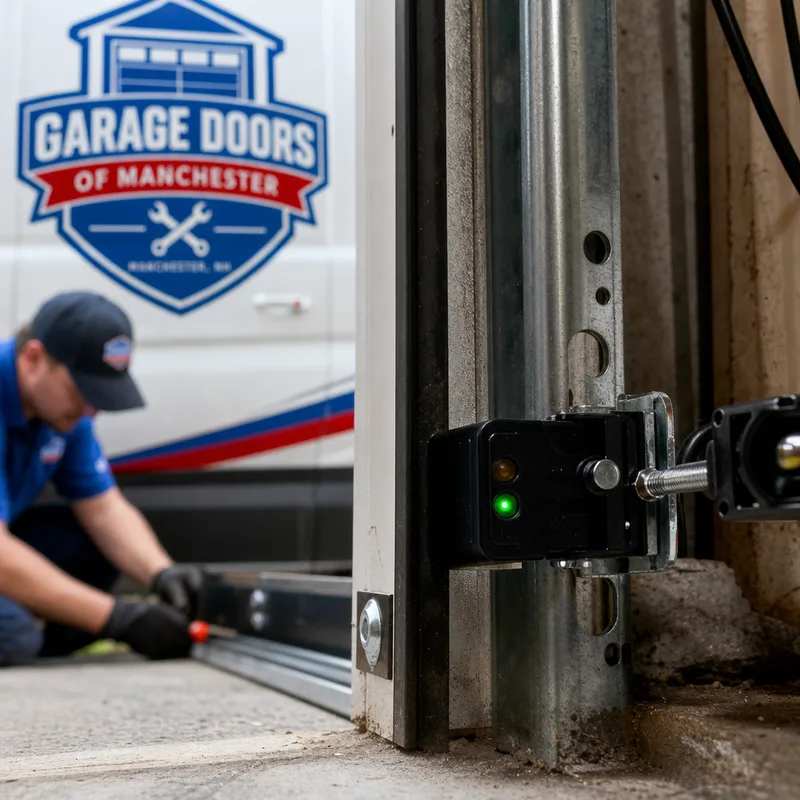
Photo eyes, edge sensors, and code-required entrapment protection so the door can be used around people and equipment.
Bottom seals, weatherstripping, and door construction choices that match drafts, dust, and high traffic at docks and bays.
What parts are most likely to wear in a high-cycle opening and what a practical maintenance schedule looks like for your building.
From first call to handover
Share the basics once: door type, approximate size, how it's used, and whether the issue is an install, a replacement, or a repair.
We connect you with a contractor who works on commercial overhead doors in the Manchester area so you can discuss site conditions and scheduling directly.
The contractor typically checks measurements, track clearances, power and mounting options for the operator, and safety-device placement.
Depending on the job, the old door is removed, the track and spring system is set up, the operator is installed, and safety devices are adjusted and tested.
Review how the door operates, what to watch for, and which parts wear. Ask the contractor about maintenance intervals and warranty terms.
If your dock door is down, your roll-up is sticking, or you're planning a new install, describe the door and the opening once and get connected with a local contractor who can take it from there.
Doors, hardware and safety details
Plan the next step clearly
The most helpful details are door type, approximate width and height, the building use, and whether you need an operator and controls. If the door is replacing an existing unit, note anything unusual like low headroom, sloped floors, or forklifts that regularly pass through the opening.
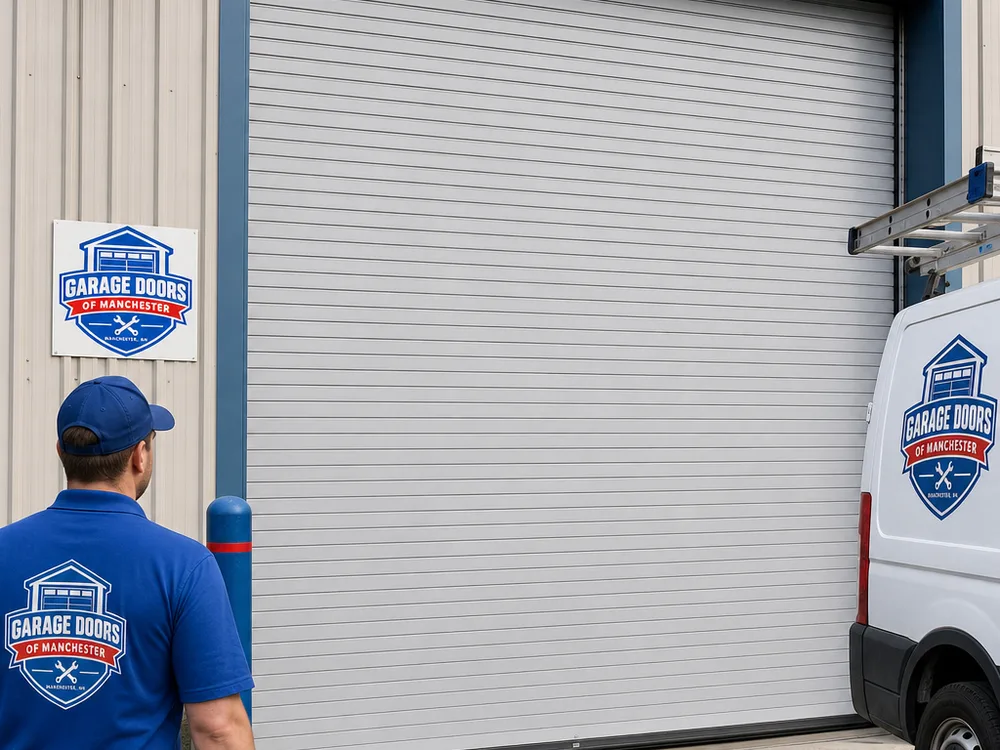
If the panels, curtain, and track are straight and the door is structurally sound, service often focuses on wear parts and adjustments. Replacement becomes more likely when the door is bent, the curtain is damaged, the track is twisted, or the opening needs a different lift setup.
Roll up door repair is often triggered by impact damage to the bottom bar or guides, misaligned slats, worn bearings, or a tension problem in the barrel assembly. A contractor will usually start by checking the guides, curtain or slats, and counterbalance system.
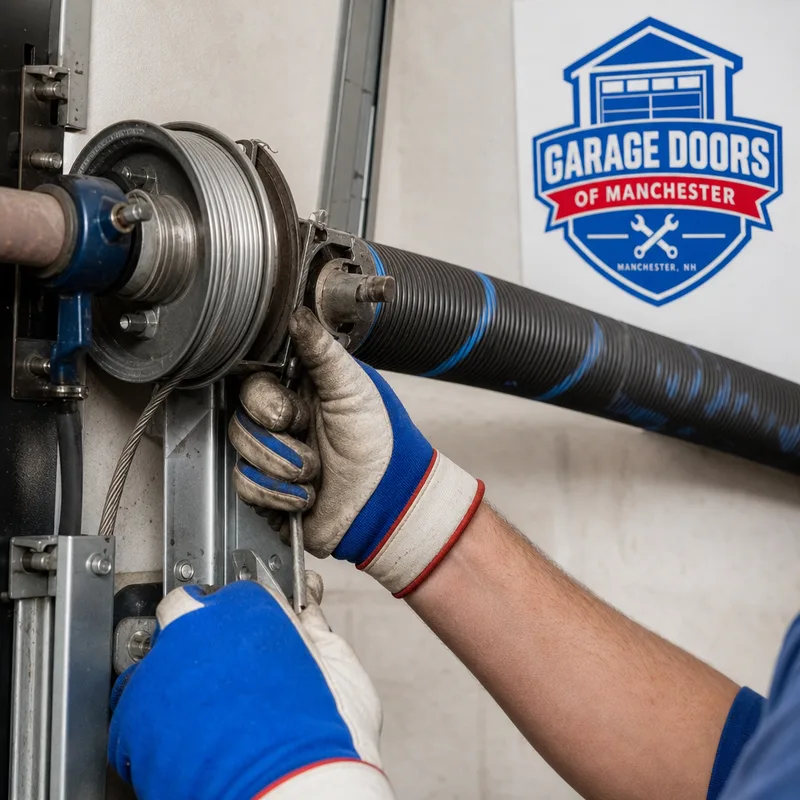
Warehouse overhead door repair commonly starts with a safety and movement check: track alignment, roller condition, cable wear, drum condition, spring balance, and opener behavior under load. Binding often points to a track issue or a door that has gone out of square.
It depends on whether the problem is in the operator alone or caused by a door that is out of balance. Springs, cables, rollers, or track alignment can make the door heavy or inconsistent, which can damage motor and drive components.
Contractors often check photo eyes or other monitored safety devices, verify the door reverses as intended, and confirm controls are placed and functioning correctly. They also watch for worn lift cables and hardware fatigue on high-cycle doors.
Yes. Calls are usually easiest to route when you describe the door type and symptoms, such as not opening, stopping midway, noisy travel, a damaged section, or a stuck roll-up. The contractor can identify compatible parts after understanding the operator setup and opening.
Ask what they think is most likely based on your description, what they will inspect first, and whether they recommend repair, retrofit, or replacement. For a new installation, ask about track lift options, insulation, controls, safety devices, and warranty terms.
One call starts the connection
Call Garage doors of Manchester, describe the opening and what the door is doing, and we'll connect you with a local contractor who works on commercial garage door installation and repair so you can decide what to do next.